


Hi social pro 👋
Not every comment needs a reaction. But when there are thousands under every post, it’s hard to tell which ones do.
This week we’re breaking down the difference between a comment, a pattern and an insight, and how to tell which one you’re looking at before deciding what to do about it.
Let’s get into it 👇
— Brett
From the feed: Comment, pattern, or insight?
Every social team has been there. An angry comment lands under a post, someone screenshots it into Slack, and within the hour there's a thread debating whether the brand needs to respond, whether it's the start of something bigger, and who else needs to see it.
Sometimes it does need a response. Often it doesn't, or at least not yet. Knowing which comes down to one question: are you looking at a comment, a pattern, or an insight?
The three terms get used interchangeably in a lot of social reporting, but each one tells you something different and calls for a different response.
Here's what separates them, using one example that runs through all three.
Comment

A comment is one person's reaction, in one place. Picture a snack brand posting a new product shot, and someone replying that it doesn't taste the way it used to.
On its own, that comment could mean almost anything. The person might have had a bad batch, their tastes might have changed, or they might be the first to notice something lots of other people will notice too. There's no way to tell which from a single comment.
That makes a comment an anecdote rather than evidence. It's often where you first spot something, but it shouldn't drive a decision on its own. A screenshot of one unhappy customer can end up steering an entire stakeholder conversation if nobody asks how many other people said the same thing.
Pattern

A pattern is the same reaction showing up across different people and different posts. Over the next few weeks, the snack brand's comment sections fill up with variations on the same theme. Some people say it tastes different now. Others ask outright whether the recipe has changed, or say something's off and they can't work out what.
None of these commenters use the same words, and most of them aren't replying to each other. Put together, though, they point to the same experience, and that's the moment a one-off becomes a signal.
Patterns are easy to miss because they're spread out. A complaint that appears once under each of ten posts barely registers if you read each comment section separately. Grouping comments by topic, rather than by the post they appeared under, is usually what makes a pattern visible.
A pattern tells you what's happening. It doesn't yet tell you why, or what to do about it.
Insight

An insight is the pattern, explained. It's an actionable read on how your audience is behaving or feeling, backed by the volume of comments behind it.
For the snack brand, the insight is that loyal customers have noticed a recipe change, and the brand's silence about it is eroding their trust. Every part of that sentence comes from the comments: who's talking (long-time customers), what they've noticed (the taste), and what it's doing to the relationship (they feel nobody has told them anything).
An insight also has to point somewhere. Here, the next step could be a short video from the Head of Product acknowledging the change and explaining why it was made, pinned to the top of the brand's main channels for two weeks. The comments then become the measurement. If the replies move from confusion to acceptance, it worked. An insight that doesn't lead to an action like this is just a well-written observation.
Putting it into practice

The same three steps work for almost any brand. Picture a hotel group where one guest complains in the comments that check-in took forever. That's a comment, and on its own it's a bad afternoon.
Looking across reviews, comments and DMs, the team finds the same complaint coming up again and again, almost always from guests staying at the weekend. That's the pattern.
The insight is that the hotel has a weekend staffing gap, which needs a very different fix from a general staffing problem. The action is to add one extra front-desk shift on weekends for 30 days and compare complaint volume before and after.
The difference between the three comes down to how much weight each one can carry. A comment suggests something might be happening, a pattern confirms it's happening to a lot of people, and an insight explains why and tells you what to do next.
So the next time an angry comment ends up in a Slack thread, the most useful first question is whether anyone else is saying the same thing. If they are, you've found a pattern, and the work of turning it into an insight can start.
On our radar
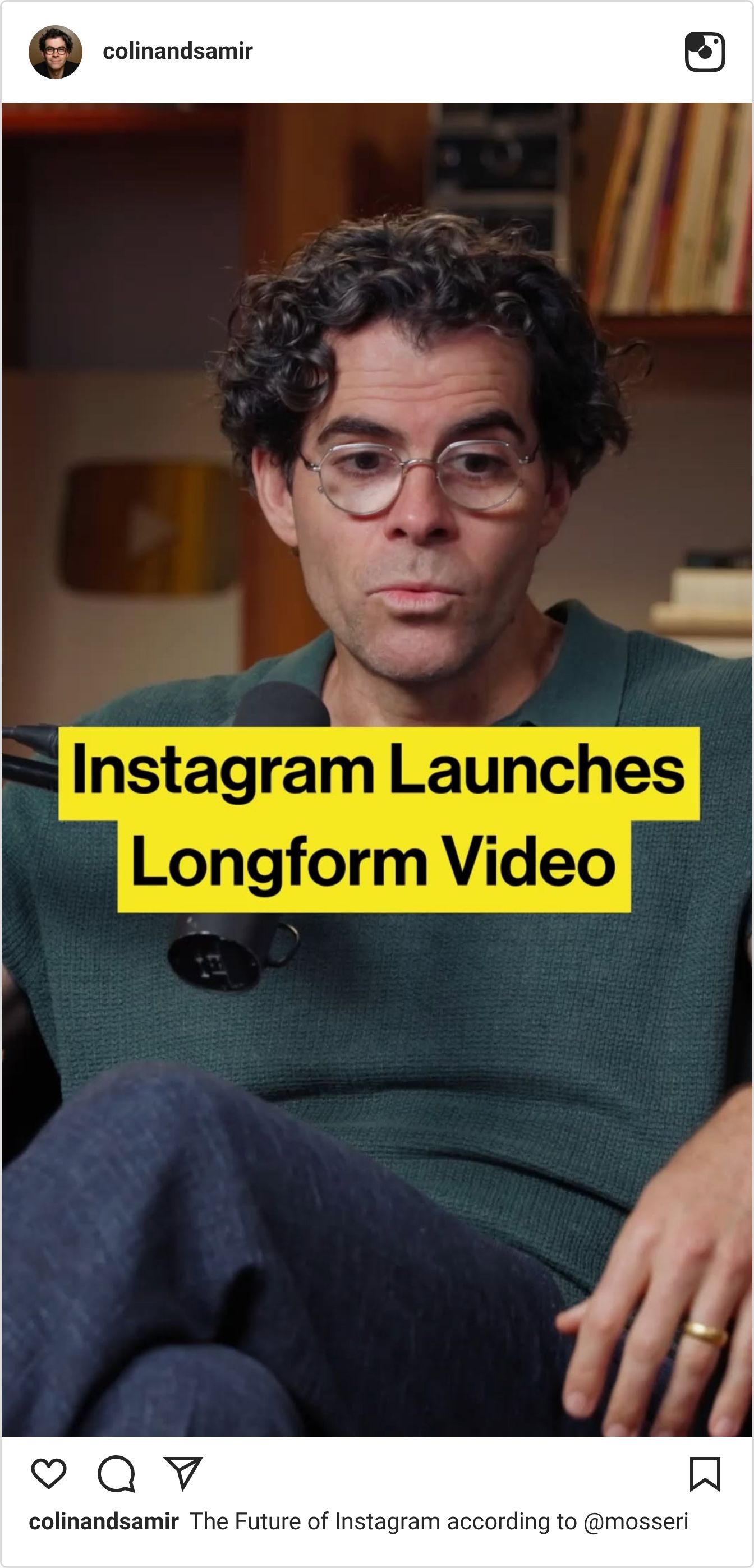
ICYMI, Instagram is testing 90-minute horizontal videos.
The new format, called Features, was announced by Adam Mosseri and Tessa Lyons on Monday and is starting with a small group of creators in the US and Brazil. Alongside it, Instagram is testing Reels that link through to the full video, series on creator profiles, and a TV app that puts Features front and center.
Reactions so far are mixed. Creators are asking why they’d post long-form on Instagram when YouTube shares ad revenue and Instagram doesn’t yet. Meanwhile, Link in Bio’s Rachel Karten thinks brands are well placed to help fill the new inventory.
For social teams, it means comment sections that build across a series instead of a single post, and a new way to find out whether audiences actually stay for the long version.
Trend watch
What the Siftsy team has been reading, saving, and talking about this week.


Thanks for reading The Signal.
If something here sparked a thought or reaction, drop it in the comments (aka reply back here).
See you next week,
Research and editorial support by Amy Watts