

Hi social pro 👋
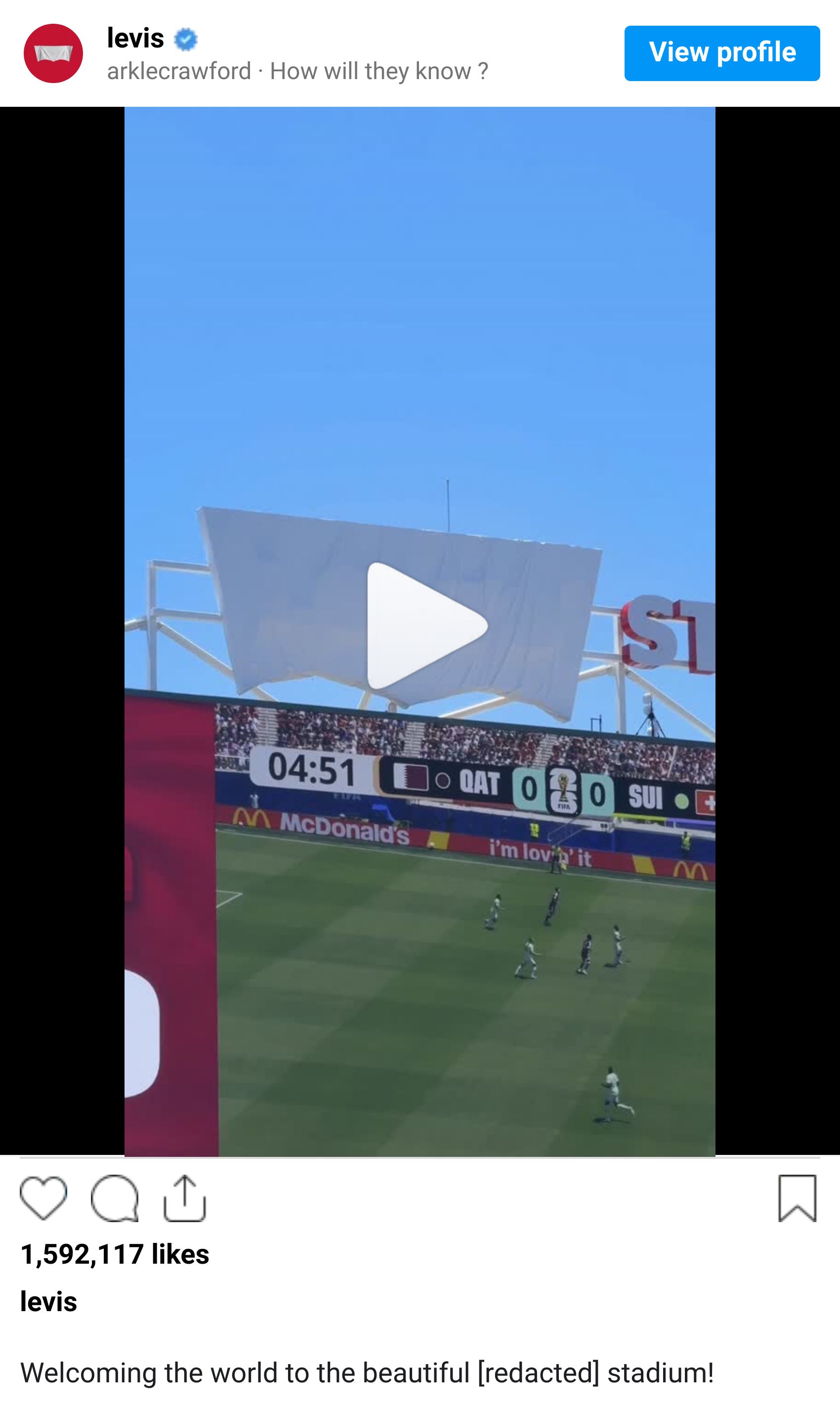
FIFA covered Levi’s Stadium’s logo for the World Cup. Standard procedure for non-sponsors - but Levi’s social team had other ideas.
One post and a profile picture update later, they’d turned a restriction into one of the most talked-about brand moments of the tournament so far.
Let’s get into it 👇
— Brett
From the feed: How Levi's made getting censored look good
Levi’s Stadium in San Francisco is one of the most recognizable venues in American sports. It’s also not an official FIFA World Cup sponsor - which means that for the duration of the tournament, FIFA’s clean stadium policy required every trace of the Levi’s logo to be covered up.
It’s a standard clause. Non-sponsor brands get covered up at World Cup venues, their signage taped over or draped in a tarpaulin for the cameras. Most brands in that position say nothing and wait for it to be over.
Instead, Levi’s posted about it. And then updated their profile picture to show the covered logo.
We ran 18,000 comments through Siftsy to understand how the moment landed, and what it reveals about what great social execution really looks like.
The profile picture did more work than the content
There’s a version of this moment where Levi’s posts the photo of the covered stadium and leaves it there. Plenty of brands would have done exactly that - documented the situation, added a caption, and called it done. But the profile picture update is what separated the execution from the more obvious play.
It’s also the detail that revealed something about this particular audience. The top comment, with over 129,000 likes, was reacting entirely to the avatar change. Which means a significant chunk of the people who engaged with this content were paying close enough attention to notice a profile picture had changed.
That’s a level of audience attention most brands would kill for, and Levi’s earned it by giving people something worth finding.

The comment section became a product pitch meeting
What’s striking about the merch conversation - which took up 10.1% of all comments, by the way - is the specificity.
Commenters were naming SKUs, describing colourways, suggesting product lines, imagining how the covered logo aesthetic would translate to jeans, jackets and t-shirts. Other brands even showed up in the replies to request stock for themselves.
This kind of detail - coming with purchase intent already attached - is rare.
But 61,000 people agreed on the missed opportunity
Alongside the broader merch demand, people were also arguing that Levi’s should have covered the stadium logo in denim fabric rather than a plain tarp. It's a small distinction on the surface, but it reveals how deeply invested this audience was in the execution. They identified the gap between what happened and what could have happened, and made the case for the more on-brand version with enough conviction that it became one of the most-liked ideas in the entire thread.
That level of creative specificity from a focus group is rare, yet it was provided in the comments unprompted. The denim cover idea arrived fully formed in the replies - a product brief, an event activation, and a content moment, written by the audience for free.

The audience understood the strategy behind the joke
One of the more interesting threads across the comments is people explaining FIFA’s clean stadium policy to each other unprompted. Their audience was doing the contextual work - educating others about why the logo was covered and what it meant - and using it as a platform to credit Levi’s for the response.
It’s a meaningfully different reaction to going viral for a stunt. People were impressed by the mechanics of it, understanding that the situation was outside of Levi’s control and that the social team had made something out of nothing.
And it’s safe to say that informed appreciation tends to produce more durable brand affinity than a moment that just gets laughs.
The through-line across all 18,000 comments is an audience that felt like they were in on something - and responded by doing a significant amount of the brand’s work for them.
They explained the context, amplified the moment, wrote the product briefs, and pitched the follow-up activation. None of that was paid for or planned.
This is what separates a genuinely great social moment from a campaign that performs well on paper. Levi's created the conditions for the audience to participate — and then got out of the way. The comments did the rest.
Pulse check
Was Levi's World Cup moment brilliant strategy or brilliant luck?
On our radar

Clip farms are one of those things that social pros know exist but rarely talk about openly.
Carmen Vicente’s video breaking down how they operate has racked up 400K views across Instagram and TikTok in the past few weeks. The core argument is uncomfortable: a significant portion of the algorithmically suggested content in your feed is undisclosed stealth marketing, which means the signals social teams use to read what's genuinely gaining traction are being quietly distorted at scale.
For anyone whose job involves understanding what audiences actually think, that's a problem worth getting familiar with.
Trend watch
What the Siftsy team has been reading, saving, and talking about this week.


Thanks for reading The Signal.
If something here sparked a thought or reaction, drop it in the comments (aka reply back here). Oh, and check out our refreshed website 🙂
See you next week,
Research and editorial support by Amy Watts