

Hi social pro 👋
Last week, a CEO ate a burger. And the internet…lost its mind.
Not because of a scandal, a recall, or a controversial campaign. Because of a small bite, a beige sweater, and one word: product.
If you missed the McDonald's Big Arch video, you missed one of the most instructive brand moments of the year so far. And if you caught it - you probably had thoughts of your own.
This week, we're unpacking what actually happened in the comment section, what the data showed, and what every brand team can take from it.
Let’s get into it 👇
— Brett
From the feed: What 25,000 comments told us about the McDonald's CEO video

Last week, McDonald's CEO Chris Kempczinski posted a video tasting the Big Arch - the brand's newest burger. He picked it up, called it a "product," took a small and polite bite, declared it "so good," and moved on. There was nothing scandalous about it. But something about it didn't sit right with the internet.
The comment section noticed immediately.
Within hours, the video had accumulated thousands of comments - fixating on the tiny bite, the cutaway, the facial expressions, and above all, that word:
Product.
To a comment section full of people who grew up eating Big Macs, calling a burger a "product" felt clinical, cold, and unconvincing. It repeatedly reignited the same question: does this man actually eat McDonald's?

Competitors spotted the opening fast. Burger King, Wendy's, Jack in the Box, Wingstop, and Subway all showed up in the replies - some with comments, some with their own CEO taste test videos.
The thread turned into a cascade of competitive jabs, meme fodder, and cross-brand banter. At one point, McDonald's appeared to delete Burger King's comment - which the comment section immediately called out, adding another layer to the story.
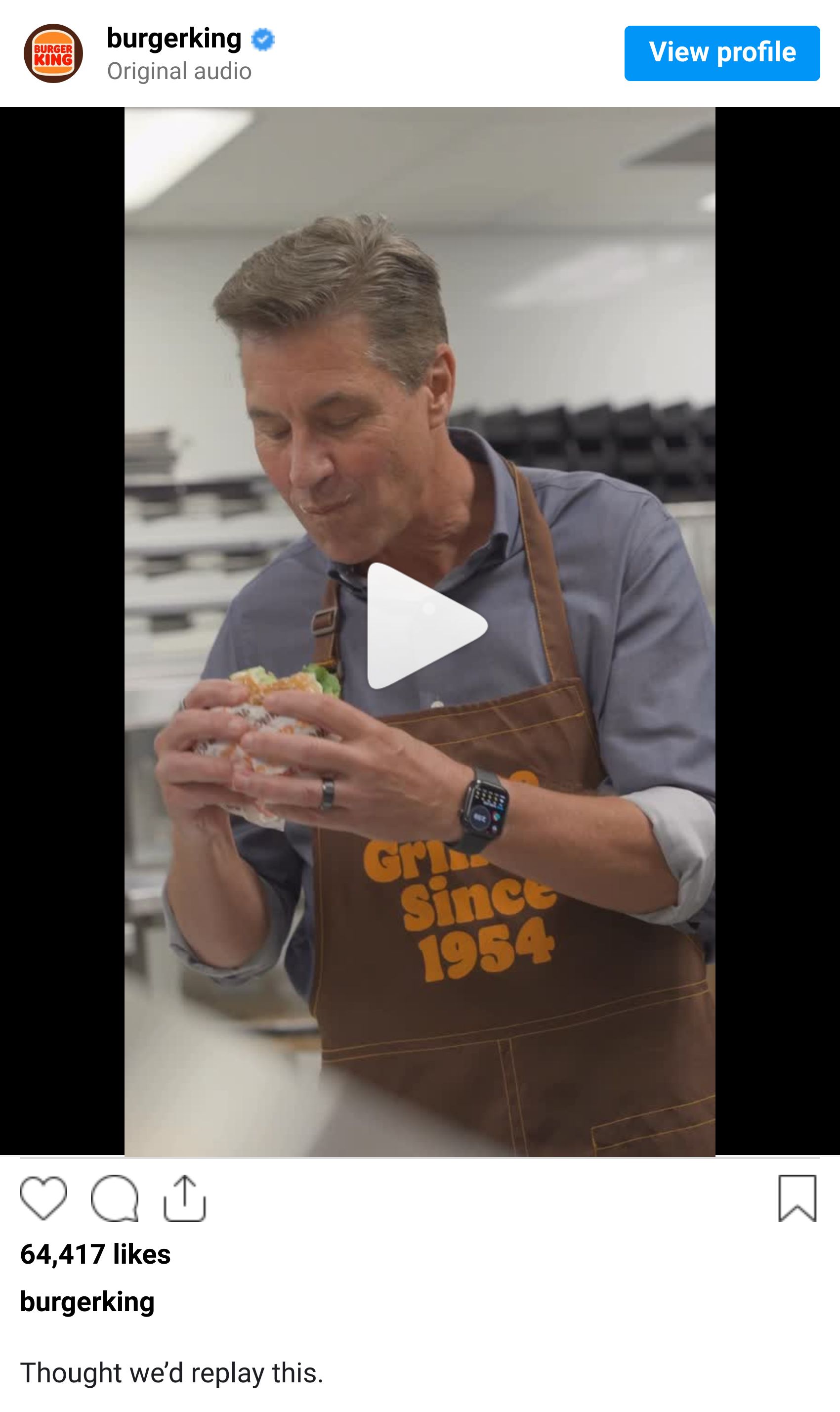
It didn't stop at brand accounts piling into the replies. CEOs from Burger King and Wendy's posted their own taste test videos in response - leaning into the contrast and turning a single awkward moment into a full competitive content trend.
What started as one CEO eating a burger on camera became a format, and the comment had spawned an entire news cycle.
We ran the video through Siftsy to see what 25,000 comments were actually saying. Three things stood out.
1. Language creates distance before anything else does
Of all the things the comment section reacted to, the word "product" triggered the most sustained backlash. It accounted for 20.4% of all comments - more than any other theme. The audience didn't need a brand strategist to tell them something felt off. They felt it immediately, and they had the language to say why.
2. Authenticity is felt before it's analyzed
The small bite, the cutaway, the facial expressions - commenters catalogued all of it. Many said the clip made them less likely to buy the Big Arch. This is the part no brief can fully anticipate: audiences don't just listen to what a brand says on camera. They watch for what isn't being said. The comment section is where that gap becomes visible.
3. How you respond to the comments is part of the story
Deleting Burger King's comment didn't make it disappear - it became its own news cycle within the thread. In a viral moment, every decision a brand makes in the comment section is as public as the original post. Sometimes the reply is the message.
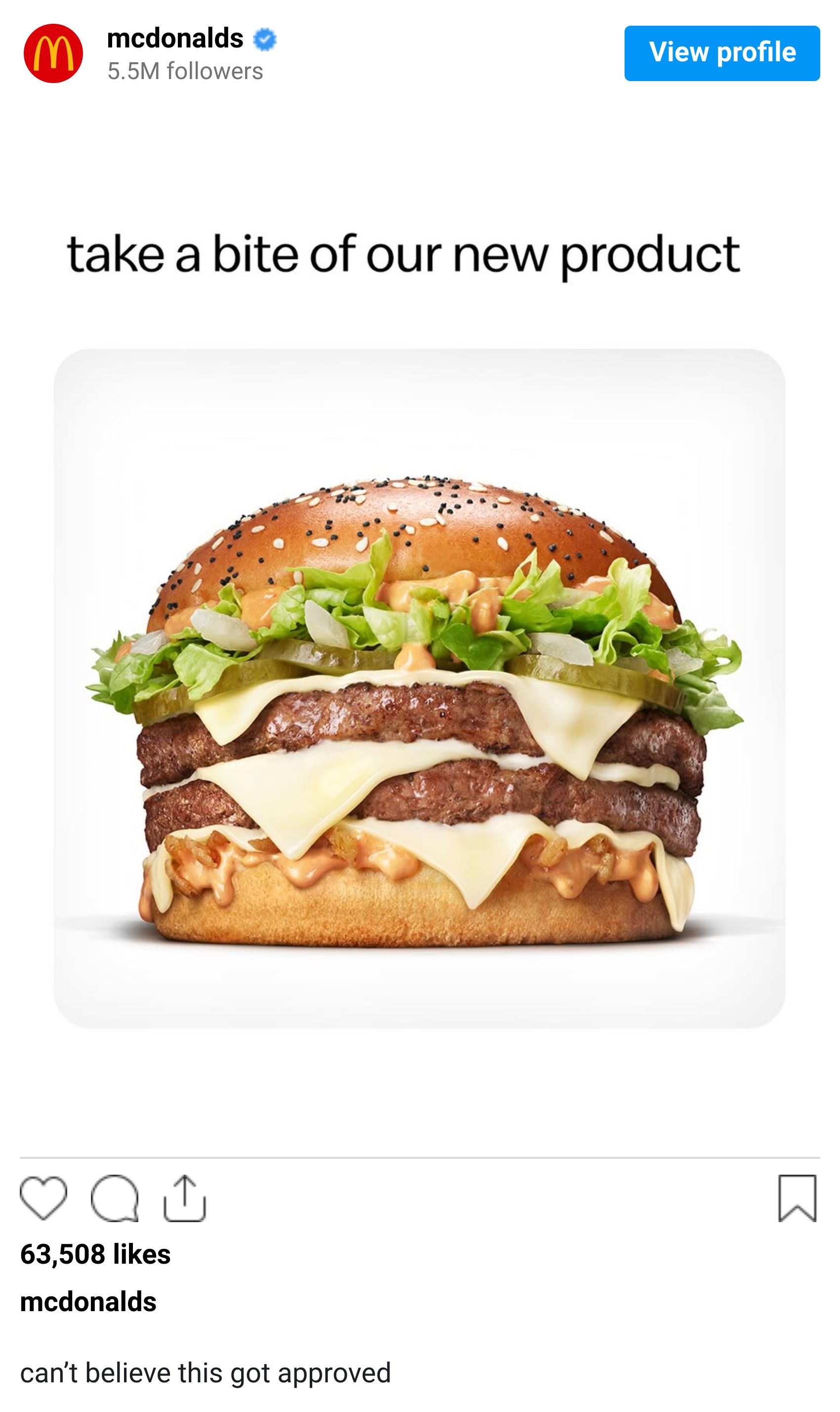
But then McDonald's did something smart. A few days later, they posted a photo of the Big Arch with a simple caption: "take a bite of our new product." They leaned into the joke - using the exact language the comment section had roasted them for, and turning it into a self-aware moment. It landed. The comment section, which had been so quick to pile on, rewarded them for it.
The whole arc - from awkward video to viral pile-on to self-aware recovery - played out faster than any campaign debrief could capture. But it was all there, in the comments, in real time.
Pulse check
Was the McDonald's Big Arch video a PR disaster or a masterclass in disguise?
On our radar

Staying on the topic of burgers…
Lia Haberman highlighted another interesting angle on the McDonald's CEO moment - and it's worth reading if you haven't already.
Her take: the instinct to put leadership on camera isn't wrong, but forcing a format that doesn't fit the person always shows. Executive presence on social should match the executive. For some that's video. For others it's written posts, thought leadership, or even just thoughtful comments.
As she puts it: fix the casting before you fix the content.
Trend watch
What the Siftsy team has been reading, saving, and talking about this week.


Thanks for reading The Signal.
If something here sparked a thought or reaction, drop it in the comments (aka reply back here).
See you next week,
Research and editorial support by Amy Watts